

The E4 Lab is a new research environment for rethinking sustainability as a relational practice rooted in decolonial methodologies, fully integrating Indigenous knowledge and land-based ways of knowing.
The E4 Lab: Kahionhaktà:tye is a new hybrid research-creation space at Western University that reimagines sustainability through Indigenous knowledge systems, land-based practices, and advanced computing technologies. Located in the Dish with One Spoon Territory in Southern Ontario, and integrated within the OTEKH Labs ecosystem, the lab asks how cultural and ecological relationships shape sustainable futures. Rather than relying on generalized efficiency metrics or abstract carbon-reduction strategies, the project grounds sustainability in place-based practices rooted in reciprocity, restoration, and community.
It establishes a first-of-its-kind research-creation environment in the region—one that integrates Indigenous land-based knowledge with AI, digital fabrication, and sustainable material innovation. The E4 Lab reduces the environmental impact of studio-based research while advancing new cultural models for sustainability, supporting Indigenous leadership and long-term climate and cultural resilience through creative research.
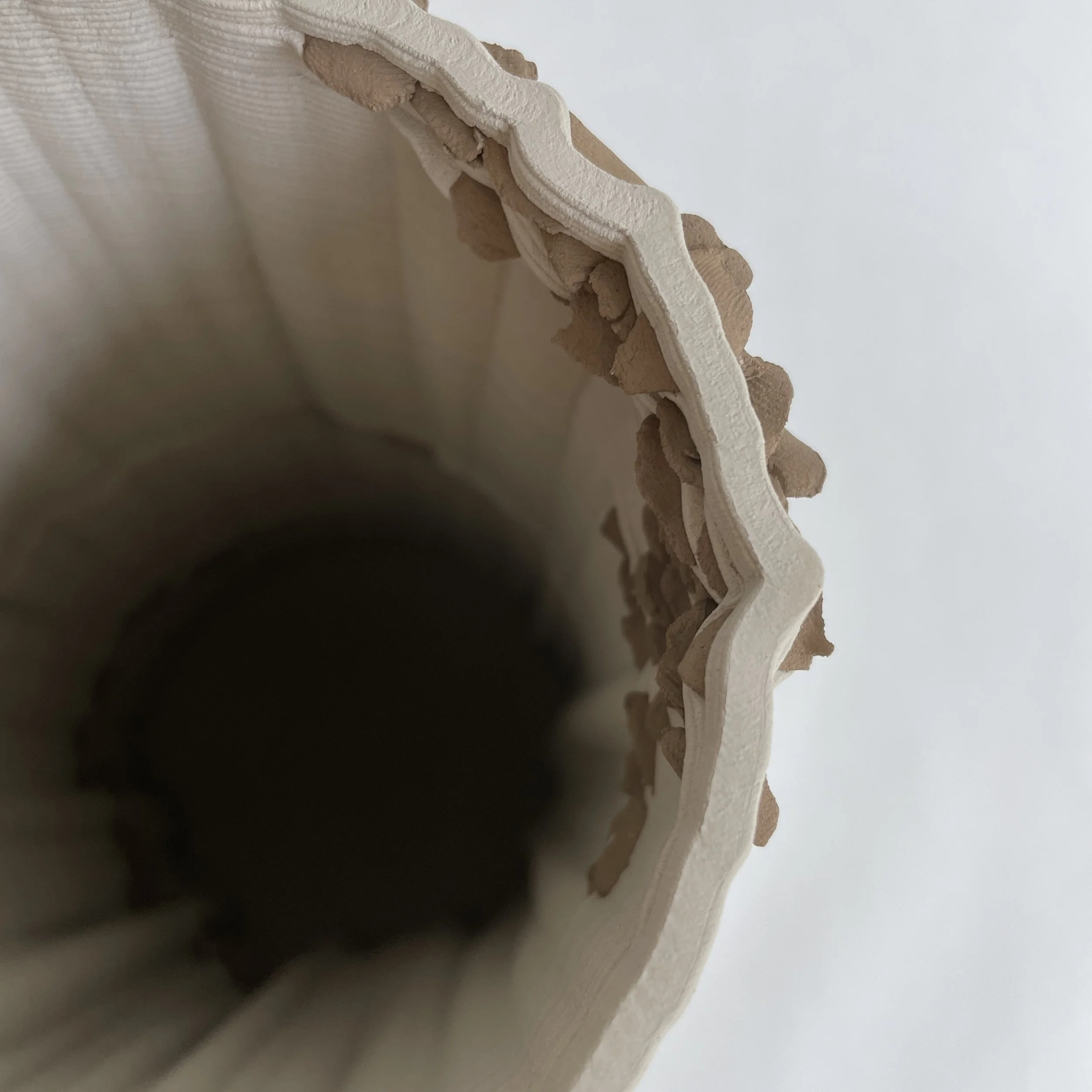
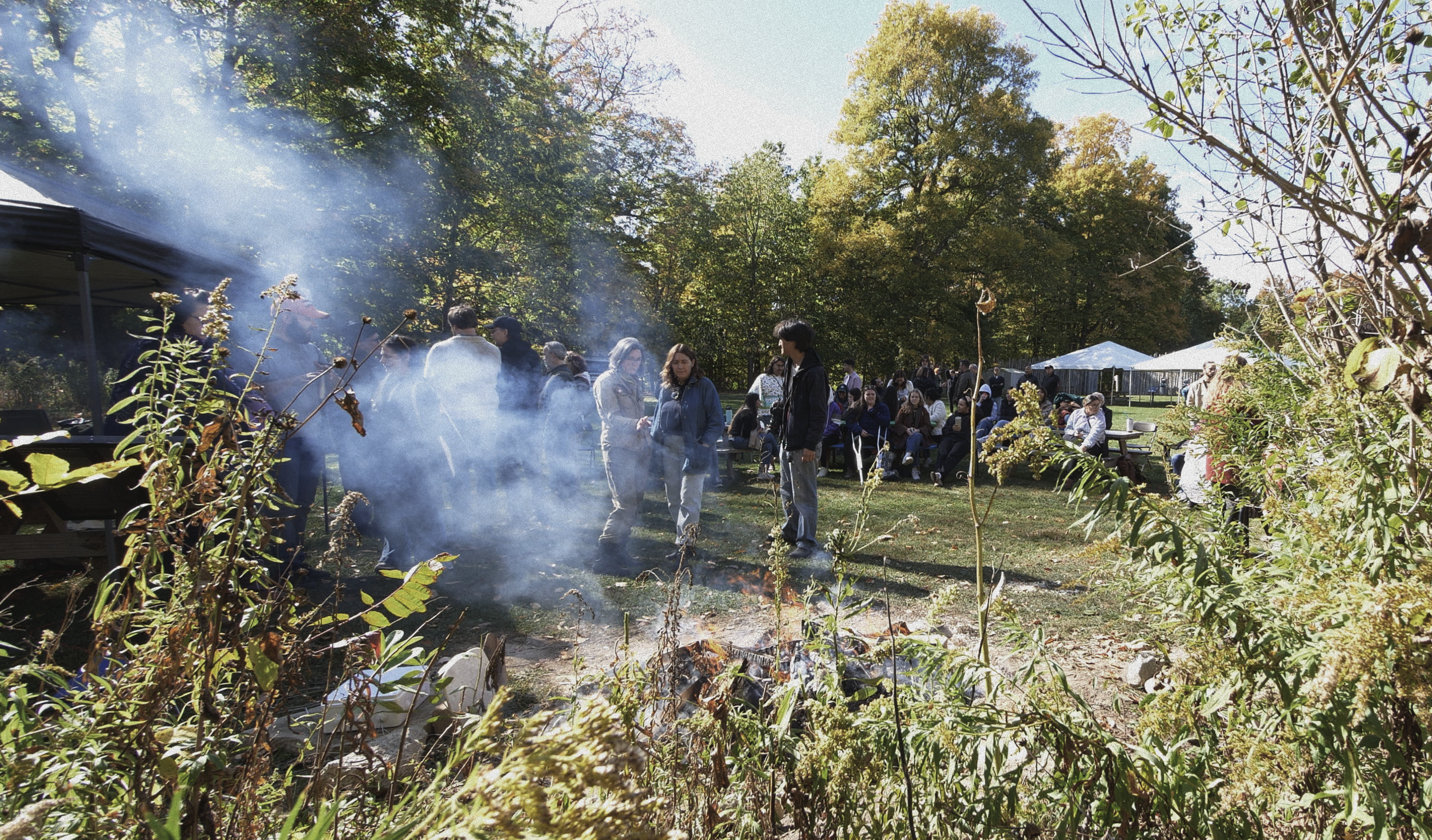
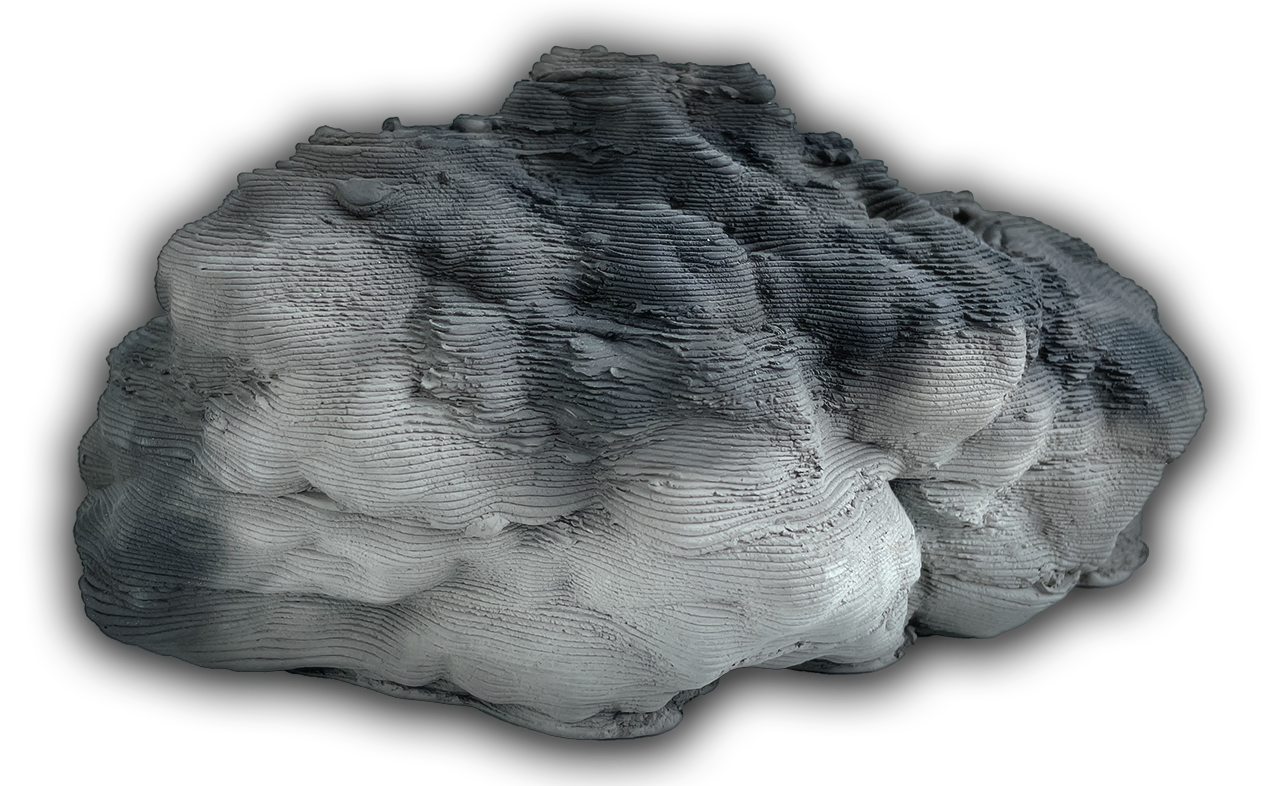
IMAGE (left): 3d printed ceramics, with process interventions, artist: Tanya Doody | IMAGE (right): 3d printed ceramics, with process interventions, artist: Tanya Doody | IMAGE (main): Pit Fire event at the MOA, part of the AbINT AGM 2025.
A central research platform within the lab is the Intelligent Pit Fire Kiln, which brings Indigenous firing practices into dialogue with locally hosted AI systems and environmental sensing.
Working with low-power, non-cloud-based technologies, the kiln contributes data to visualization systems, digital modelling processes, and immersive environments, linking land-based material transformation with computational workflows. This integration advances environmentally responsible ceramics and sustainable AI within the Dish with One Spoon region.
The project is comprised of four interconnected research streams. Land-Based Research integrating Indigenous knowledge with AI workflows develops computational design practices grounded in territory and relational accountability. Regenerative Materials Research supports local ecological restoration through earth- and bio-based experimentation. Clay, Ceramic, and Glaze Research combines regional materials, 3D clay printing, and data visualization to advance sustainable material innovation. Sustainable Fabrication explores bio-based casting, mobile production methods, and adaptive field-based toolkits that extend research beyond the studio.
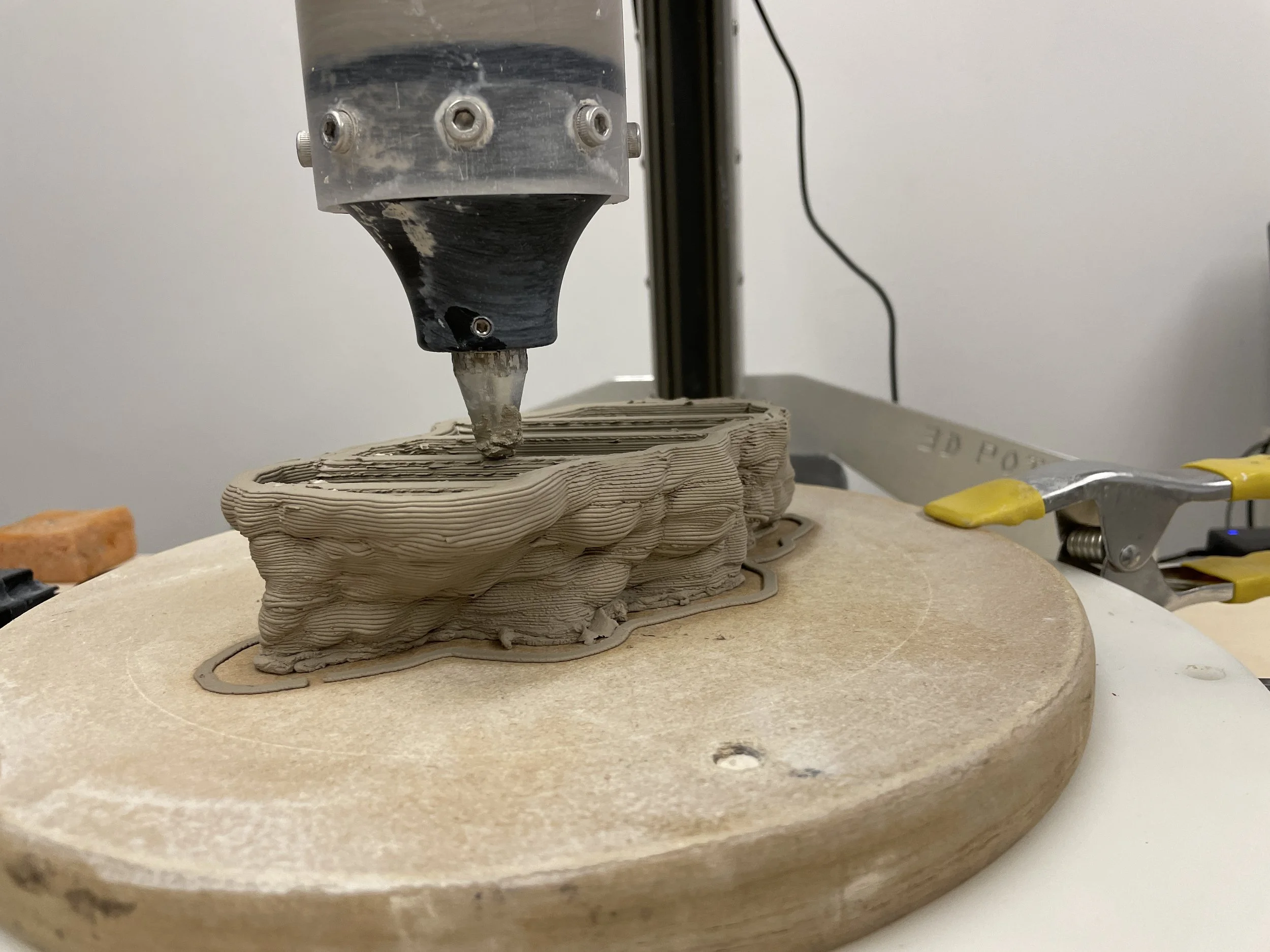
Key infrastructure includes low-emission kilns, 3D clay printing systems, robust and sustainable machine learning applications, and advanced tools for regional material processing.
Together, these systems enable workflows that combine local sourcing, digital modeling, sustainable sculpture and ceramic production, and environmentally responsive fabrication. Studio spaces are reoriented toward land-based, relational methodologies that center ethical collaboration and culturally situated technological innovation.
These initiatives are supported through collaborative connections with the Visual Arts Centre, the Wampum Learning Lodge, the Centre for Sustainable Curating, and OTEKH Labs. The lab is connected to national and international research networks, including Abundant Intelligences, and builds upon infrastructure supported by the Canada Foundation for Innovation.
By integrating advanced technical systems with Indigenous-led, relational approaches to sustainability and AI, the E4 Lab positions Southern Ontario and the Dish with One Spoon Territory as a leading site of interdisciplinary innovation across the arts and emerging technologies—where land, material, and computation remain inseparable.
IMAGE (main): 3d clay printer; experimental processes at the Banff Centre for the Arts, part of an artist residency involving preliminary research for E4 infrastructure. Artist: Tanya Doody.