


Abundant Intelligences addresses a core challenge in contemporary AI research: dominant models of intelligence are built largely on Western rationalist frameworks that exclude many ways of knowing and systematically reproduce bias, inequality, and extractive relationships. These approaches shape how AI systems are designed, trained, and deployed, often producing tools that are ill-suited to the complexity of human and more-than-human worlds. The project responds by rethinking intelligence itself, asking how AI might be conceptualized and developed through Indigenous Knowledge systems that understand knowledge as arising from long-standing relationships with land, community, practice, and responsibility.
Abundant Intelligences is an Indigenous-led research program that conceptualizes, designs, develops, and deploys Artificial Intelligence based on Indigenous Knowledge systems.
The project brings Indigenous scholars and knowledge holders, artists, researchers, and technologists into shared research-creation processes to prototype AI systems grounded in reciprocity, regeneration, and context. Abundant Intelligences supports interdisciplinary work across art, computation, and community-based research, developing place-responsive tools and critical technical practices that expand how intelligence is defined, enacted, and evaluated. Rather than treating AI as universal or neutral, the project situates AI within specific cultural, environmental, and social conditions, opening space for alternative futures shaped by Indigenous-led knowledge and governance.
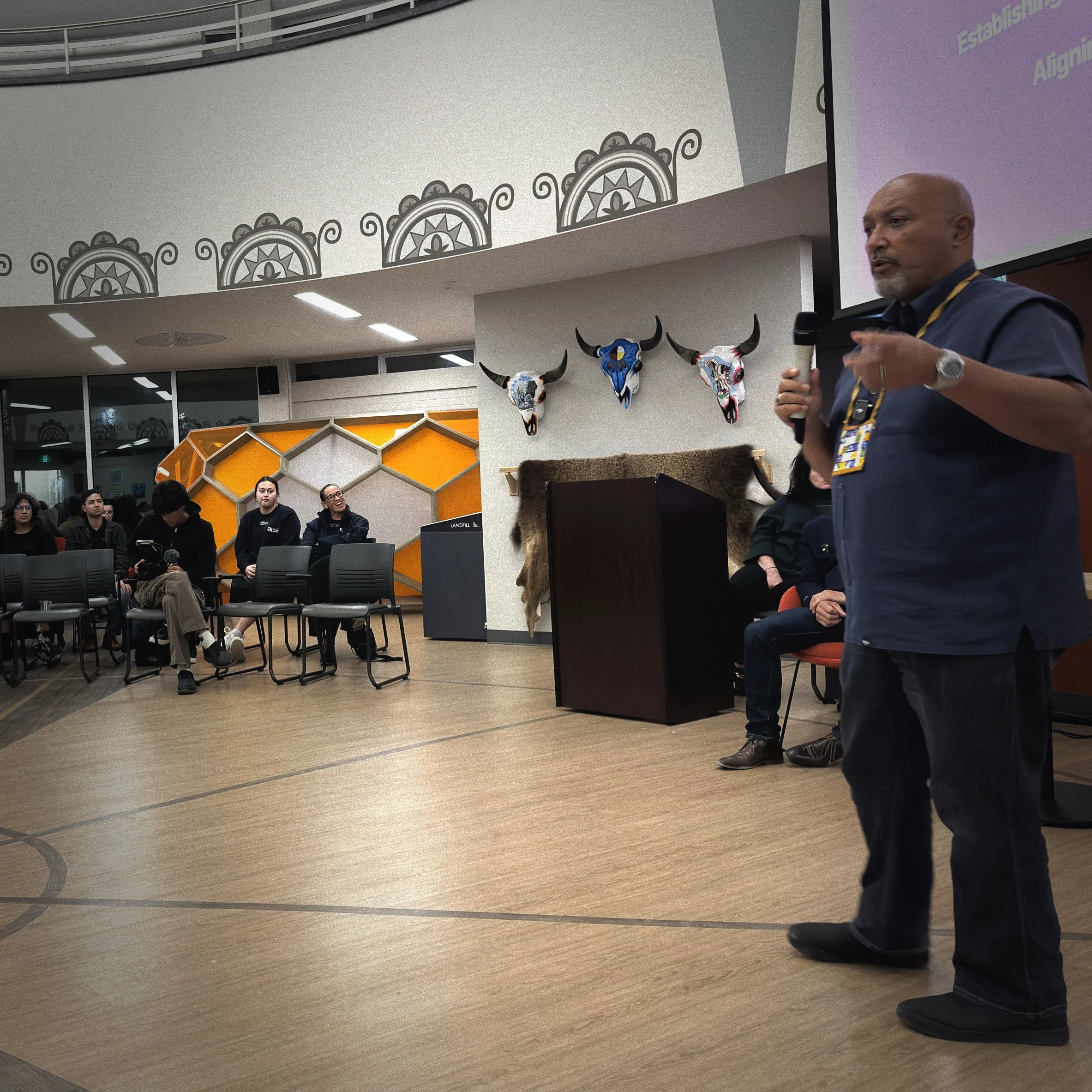
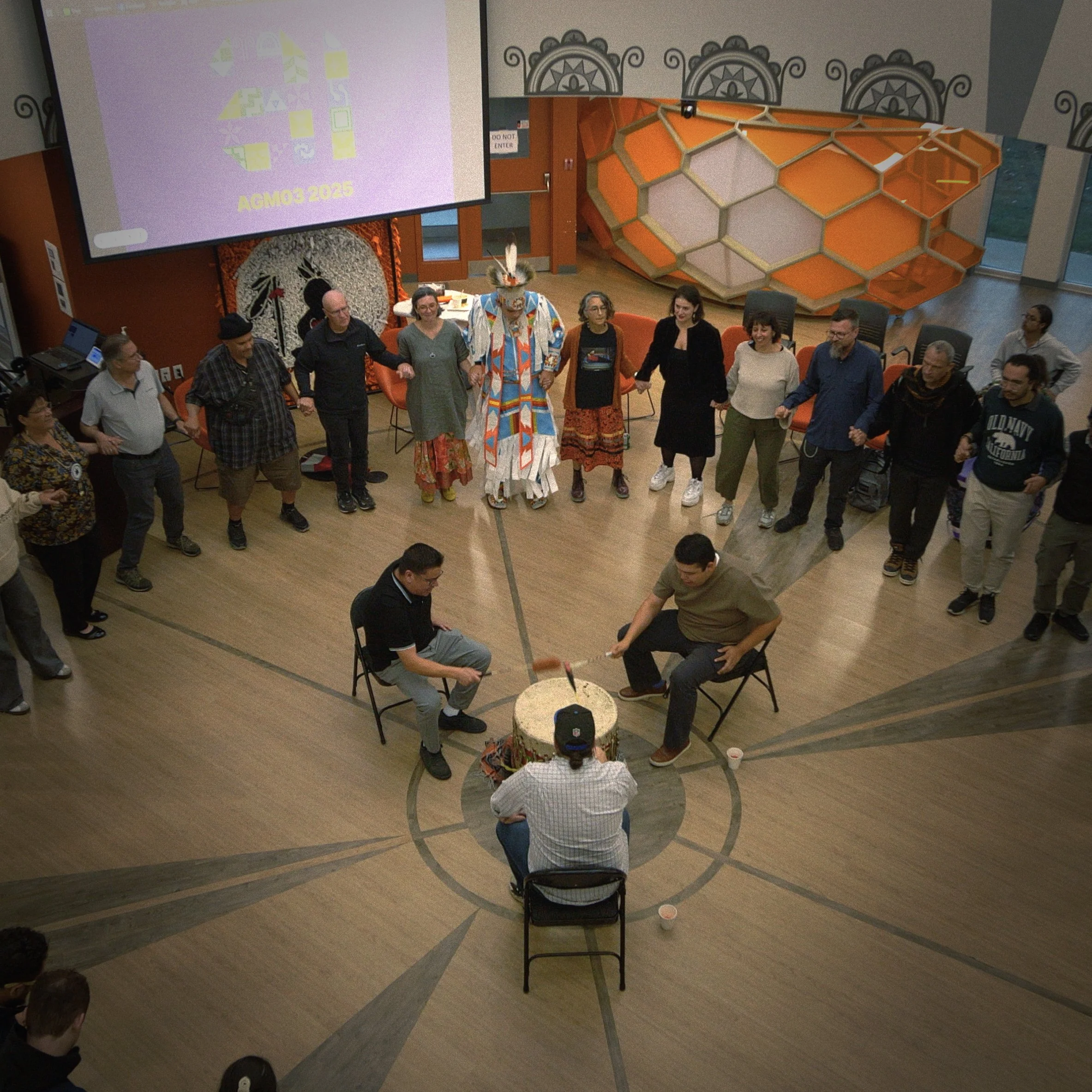
IMAGE (main): Abundant Intelligences AGM 2025, hosted by OTEKH at the Wampum Learning Lodge at Western University / IMAGE (left): Jason Lewis (NPI) Abundant Intelligences AGM 2025, hosted by OTEKH at the Wampum Learning Lodge at Western University.

The Haudenosaunee Pod is a core research initiative within the OTEKH Lab, connecting and informing all aspects of our research-creation work.
Abundant Intelligences is a shared framework through which projects, partnerships, and methods are developed, linking land-based practice, media arts, computation, and artificial intelligence into a cohesive research ecology. Within this structure, the Abundant Intelligences project plays a formative role, shaping how OTEKH’s research is conceived, organized, and carried out by embedding relationships of care, accountability, and collective stewardship into our research practices, partnerships, and creative work.
We carry the Great Law of Peace and Good Mind teachings into how we research, build, and govern. The Haudenosaunee Pod is guided by Kayaneren’kó:wa (the Great Law of Peace), which emphasizes collective responsibility, balance, and attentiveness to impacts across generations. We also carry Kanikonhrí:io (the teachings of the Good Mind), shaping how we think, deliberate, and act together with clarity and care. Together, these teachings guide our approaches to research, governance, and technology, informing how decisions are made and how relationships are sustained.
Our work treats land as an active participant in research and technology development.
From a Haudenosaunee perspective, land is a living archive and an active participant in knowledge-making. Intelligence, memory, and meaning emerge through relationships with territory, materials, stories, and people. We carry this understanding into our engagements with media arts, computation, and artificial intelligence, approaching technology as something that is relational and carries responsibility. Working within the Dish with One Spoon territory continually shapes how we attend to care, consent, and accountability.
Data is governed through Indigenous authority and responsibility.
Data sovereignty is central to our mandate and is enacted through GUIDE (the Governance and Use of Indigenous Digital Environments) , a data governance and stewardship framework developed through our research-creation practice and long-term collaboration with Indigenous artists, knowledge holders, and partners. GUIDE emerged through hands-on work with archives, language materials, environmental data, artistic projects, and AI systems, responding to community-defined needs rather than serving as a generic policy model. Through this framework, Indigenous data—cultural, linguistic, environmental, artistic, and technical—is governed under Indigenous authority, with layered permissions and protocols shaped by consent, care, and accountability. We support this governance through local infrastructures for data storage and AI research, ensuring knowledge holders guide how materials are accessed, interpreted, and shared, and that data remains relational, situated, and responsibly stewarded over time. Our research-creation projects bring land-based practice, media art, and computational experimentation into active relation. We develop site-specific installations, AI systems trained on artist- and community-generated datasets, extended and virtual reality environments, and works that integrate environmental sensing with material and storytelling practices. These projects emphasize process and responsiveness, allowing forms and systems to emerge through sustained engagement with place.
Governance is relational, collective, and Indigenous-led.
Through our work within OTEKH Labs, the Haudenosaunee Pod develops land-based research-creation ecologies that align technology with responsibility. Guided by Haudenosaunee worldviews, Kayaneren’kó:wa (the Great Law of Peace), and Kanikonhrí:io (the Good Mind), we build place-responsive, sustainable, and relational approaches to media, AI, and knowledge-making. These ecologies support enduring relationships between research, community, and territory, and orient our work toward long-term stewardship and continuity across generations.
Learning and mentorship are integral to our work.
The Haudenosaunee Pod is also a space for learning and mentorship. We work closely with students and emerging researchers, cultivating shared studio-lab environments grounded in Indigenous methodologies and skén:nen (peaceful ways of working together). These spaces support experimentation while reinforcing responsibility and collective care within creative and technical practice.
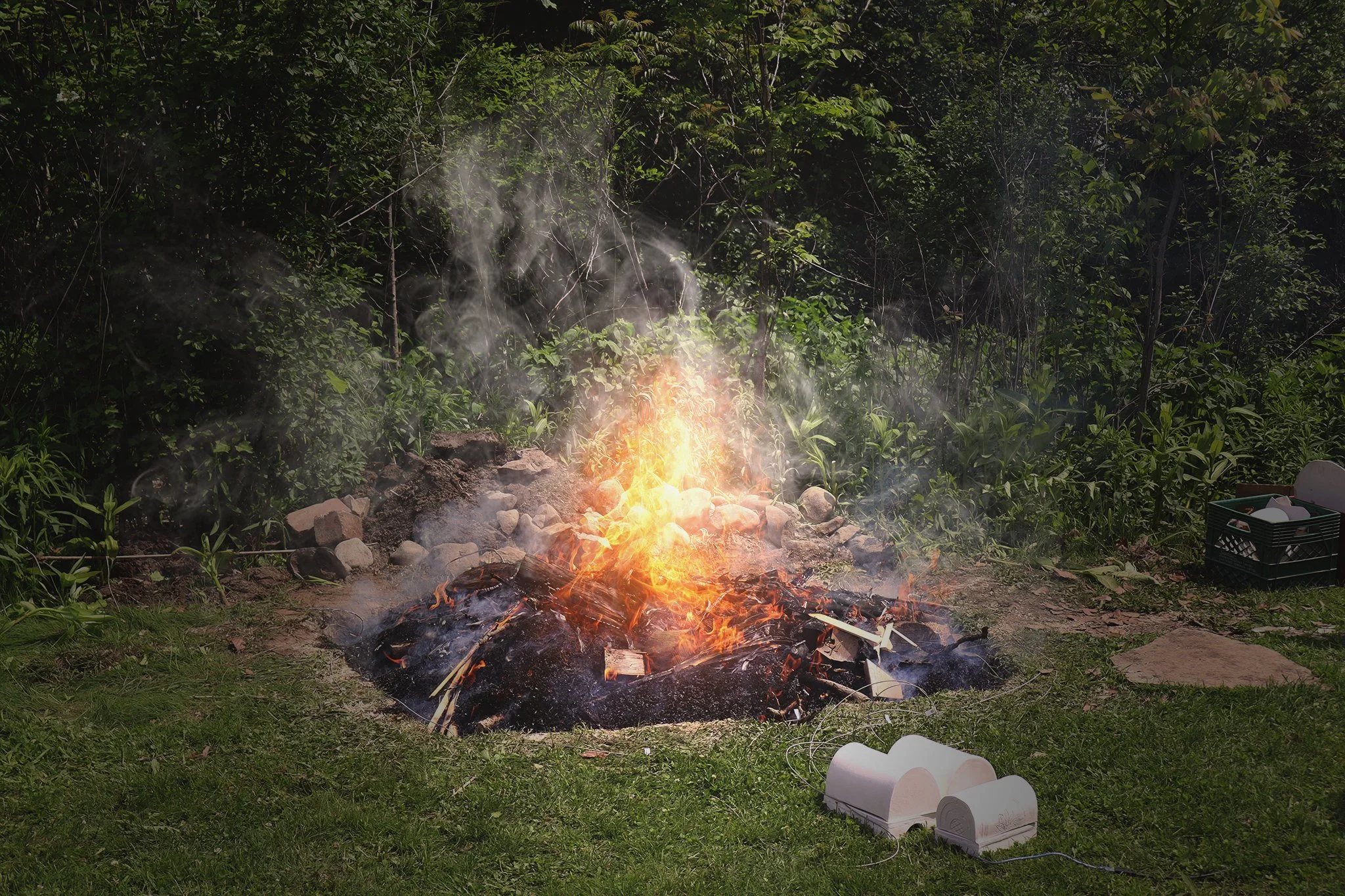
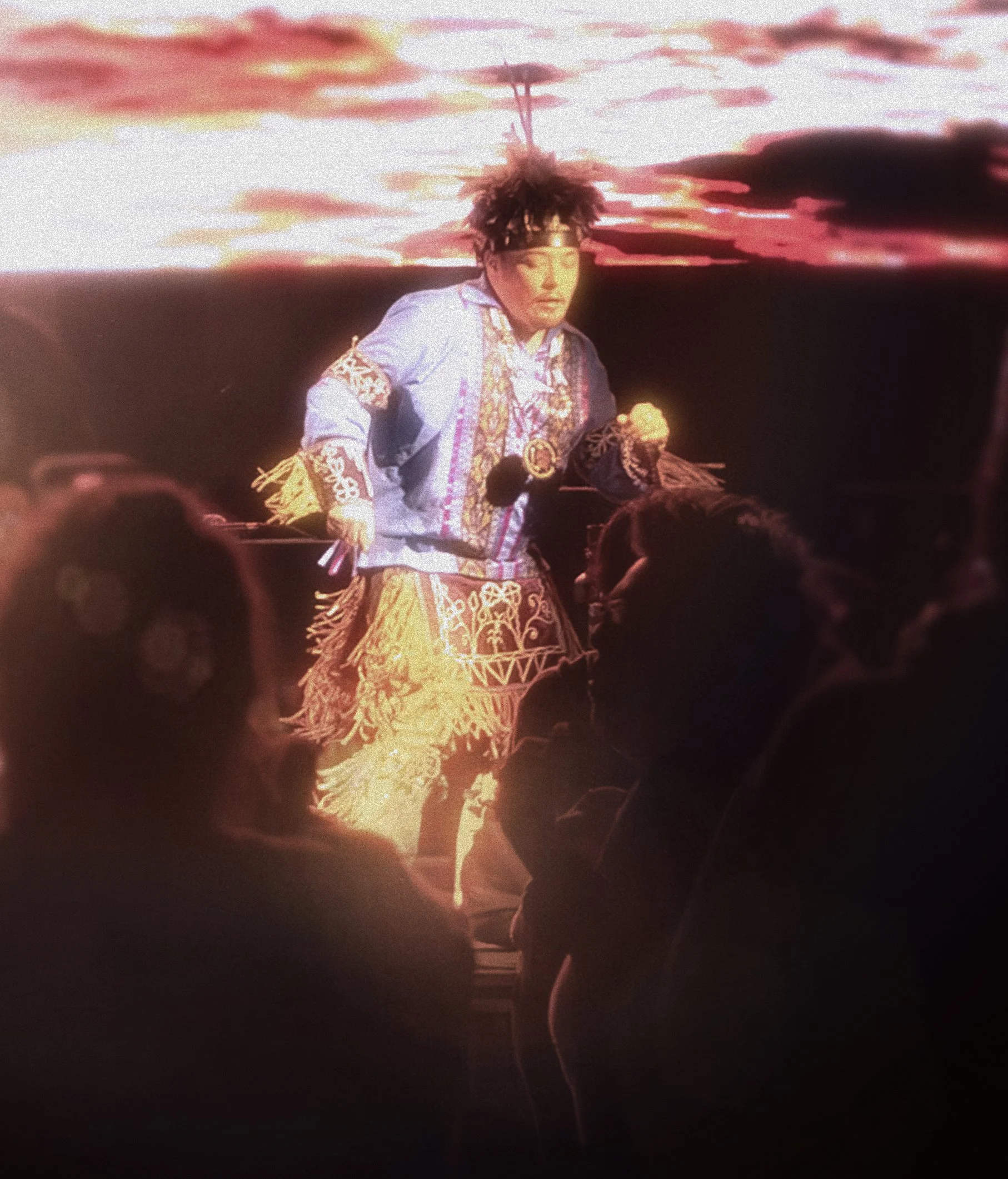
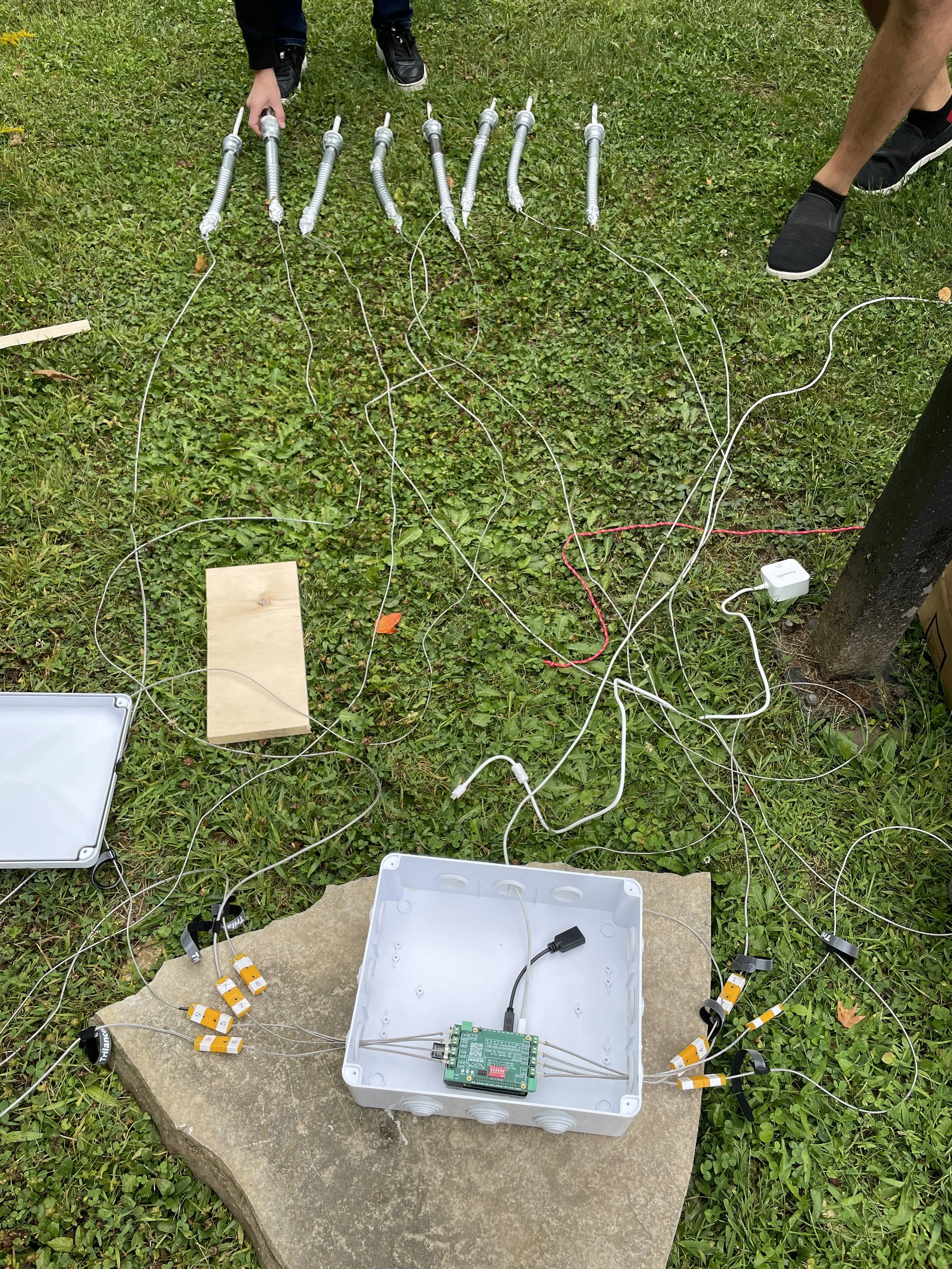
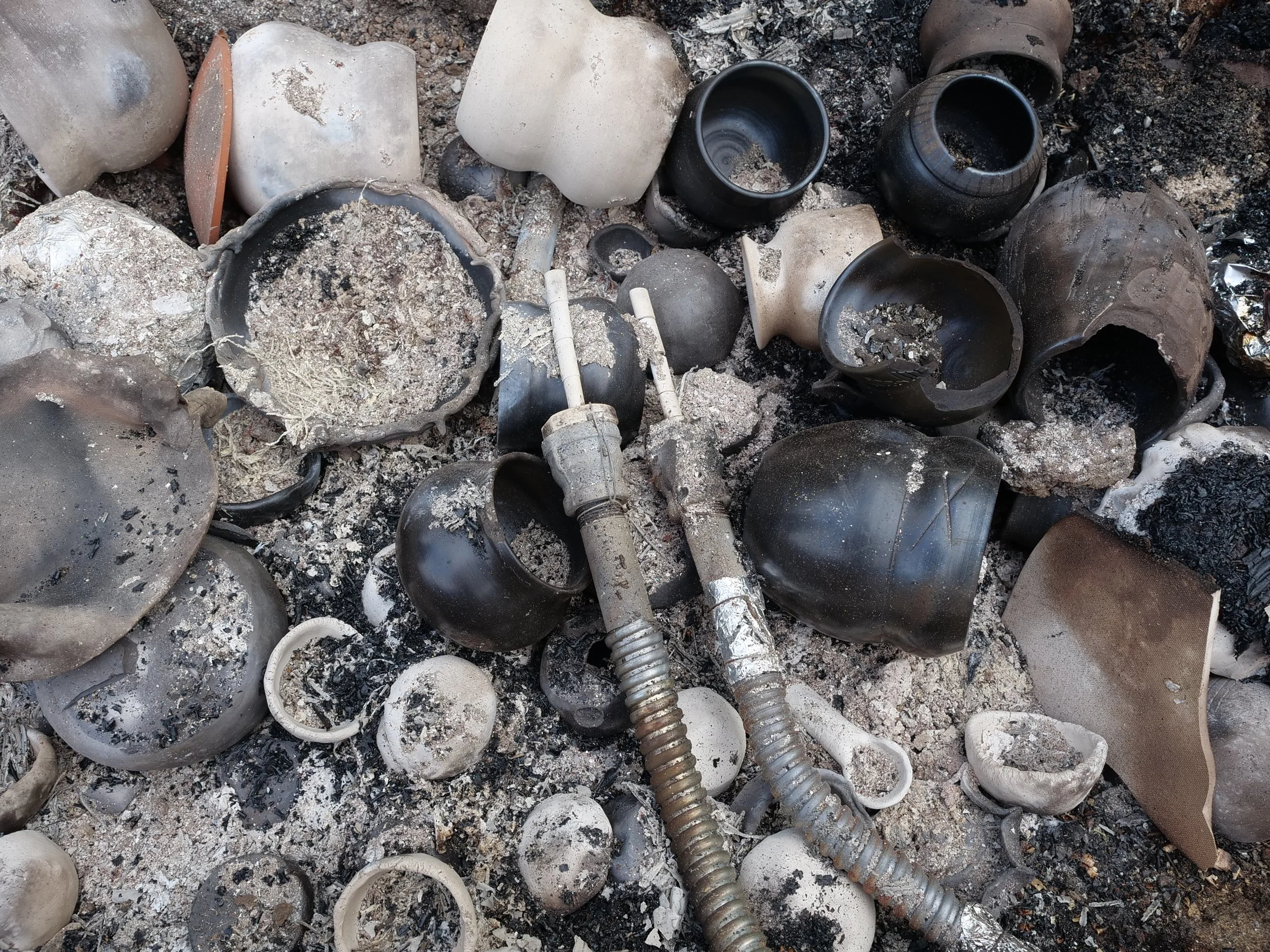
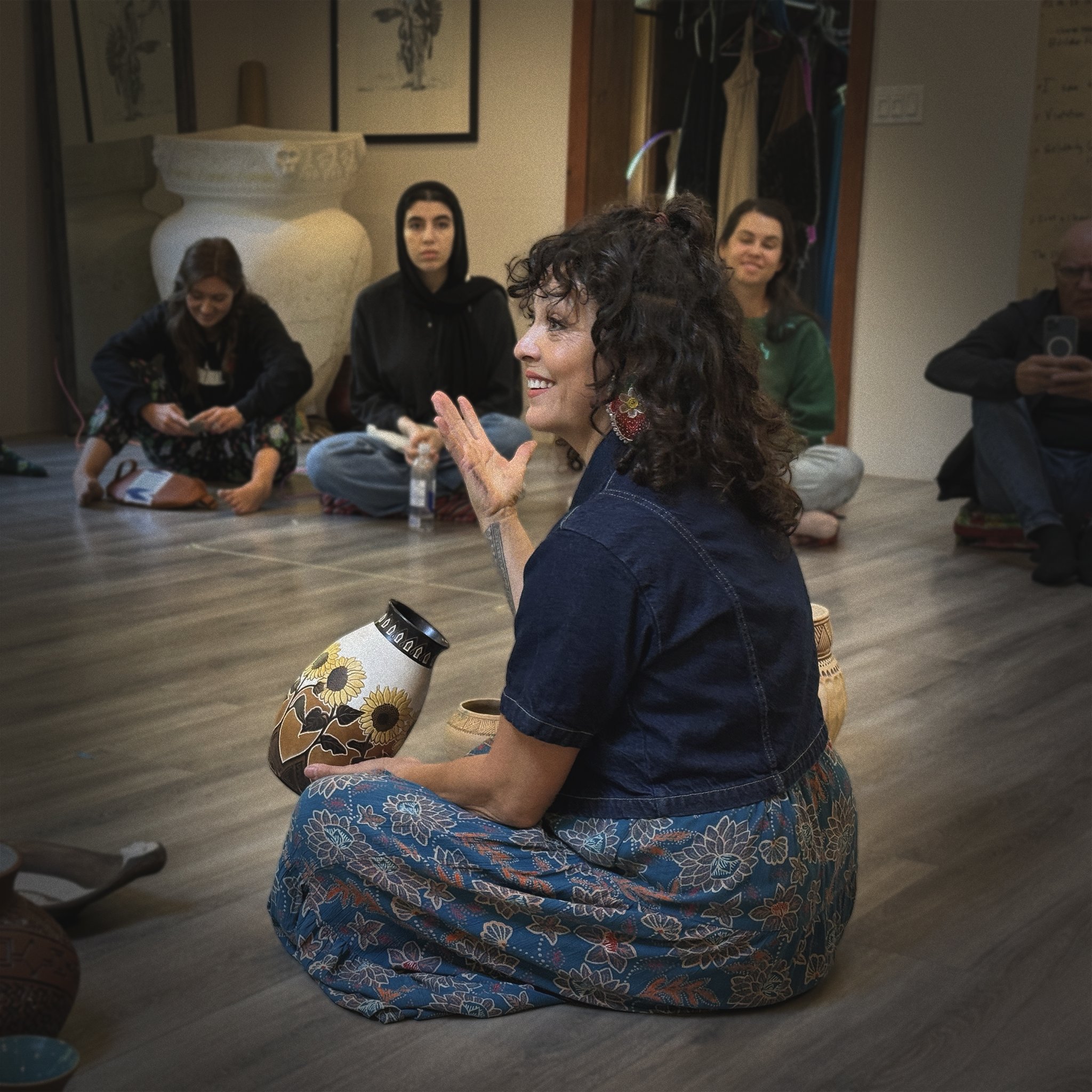
IMAGES (top to bottom): Haudenosaunee dancer, performing with SHUB at 2RO MEDIA Festival, part of the AbINT AGM 25 / Otkonkénhte (F.I.R.E.) Project, showing thermal sensors for a pit fire, driving a local AI system / Santee Smith, at her studio in Six Nations, showing her work to AGM visitors / Otkonkénhte (F.I.R.E.) project, post firing of the pit at AGM / Otkonkénhte (F.I.R.E.) during the event at the AGM 2025.